
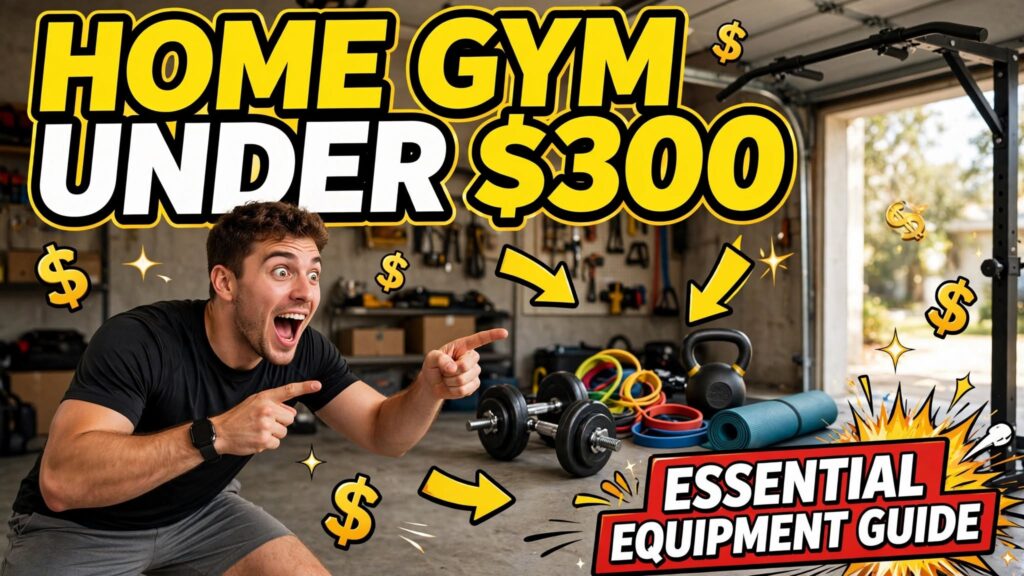
Building a home gym on a budget isn’t about buying cheap junk—it’s about being smarter than the marketing teams who want to sell you plastic-wrapped gimmicks. With careful planning and strategic purchases, you can create a genuinely capable fitness space for less than what most people spend on three months of gym membership fees.
Whether you’re working with a spare bedroom, a garage corner, or a 6×6-foot apartment space, this guide will show you exactly how to build a home gym under $300 that actually delivers results.
Why Build a Home Gym?
A commercial gym membership costs roughly $1,800 to $3,000 in your first year alone. A complete home gym, built to the blueprint in this guide, costs under $300 once—and then your training is free for life.
Beyond the financial savings, home gyms offer:
- Total flexibility: Train at 5 AM or 11 PM without checking operating hours
- No waiting: Skip the squat rack lines and crowded benches
- Privacy: No one watching you struggle with a new movement pattern
- Long-term value: Quality equipment lasts for years or even decades
The key is knowing what to buy and what to skip. Let’s break down the exact setup.
The Core Foundation: What to Buy First
Your $300 budget needs to prioritize versatility, durability, and space-efficiency. Here’s the optimal allocation:
1. Adjustable Dumbbells: Your Primary Investment
Budget allocation: $200–$240
Adjustable dumbbells are the single smartest purchase for any budget home gym. Instead of buying 10–15 pairs of fixed dumbbells, you get one set that replaces them all.
Top budget-friendly options for 2026:
- PowerBlock EXP Stage 1 (5–50 lb pair): Around $239.99 during frequent flash sales. This set is expandable, meaning you can add Stage 2 and Stage 3 kits later to reach 70–90 lb per hand without replacing the entire system.
- 66 lb Adjustable Dumbbell Set: Around $53 on sale. Some models convert to barbell or kettlebell configurations, though they can be clunky. They’re space-saving but require careful handling during weight changes.
Key advantage: A single pair of adjustable dumbbells handles everything from rear delt flyes to heavy pressing. It’s the foundation of any effective budget strength setup.
2. Resistance Bands: The Ultimate Versatility Tool
Budget allocation: $15–$30
Resistance bands are a lightweight, space-saving alternative to traditional weights—and experts say they can be just as effective for building strength, power, and muscular endurance.
What to look for:
- A set with multiple resistance levels (light, medium, heavy)
- Durable construction with sturdy clips and handles
- A door anchor for added exercise variety
Recommended pick: The Whatafit Resistance Bands set (5 bands for about $28) is a Consumer Reports Smart Buy.
Pro tip: A recent Consumer Reports test found that some HomeProGym resistance bands could fail during use. If you own the company’s purple 60-pound or gray 70-pound bands, stop using them immediately.
3. Floor Mat or Yoga Mat: Non-Negotiable Protection
Budget allocation: $12–$20
A mat protects both your equipment and your floor. It provides a stable surface for presses, rows, and core work.
Why it matters: Without a mat, your dumbbells will dent hardwood floors, and your joints will suffer during floor exercises. A 4mm yoga mat is sufficient for most budget setups.
The Optional But Game-Changing Additions
If you have room in your budget after the three essentials above, these items dramatically expand your training possibilities:
4. Adjustable or Flat Bench: The Pressing Game-Changer
Budget allocation: $20–$40 (used) or $35 (budget new)
A bench unlocks chest presses, rows, step-ups, and dozens of other exercises. Look for:
- A used flat or adjustable bench from local marketplace apps (often $20–$40)
- A basic flat bench with at least a 500–600 lb weight capacity
Buyer beware: A $35 no-name bench from Amazon can be “shockingly sturdy with 6 adjustable positions”. Just make sure to check reviews for stability and padding quality before purchasing.
5. Pull-Up Bar: Upper Body Strength Builder
Budget allocation: $20–$30
If your door frame supports it, a doorway pull-up bar is one of the best value purchases for building back and bicep strength.
Alternative: If you don’t have a suitable doorway, wood gymnastic rings (about $40) can be hung from a sturdy beam or tree branch. They’re the ultimate upper-body builder—unlike a fixed bar, rings move with your joints, which is a lifesaver for your elbows and shoulders.
6. Jump Rope or Exercise Bike: Cardio on a Budget
Budget allocation: $15–$150
Don’t buy a cheap $200 motorized treadmill—the motor will burn out and the deck is usually too short for a real stride.
Better options:
- Weighted jump rope ($15): Ten minutes of intervals with a heavy rope will tax your lungs more than thirty minutes of jogging on a cheap treadmill.
- Foldable magnetic exercise bike ($143): The MERACH Mag Bike is a popular budget option. It’s quiet enough to use while watching TV and folds into a 2×3-foot corner when not in use.
What to Avoid: The Budget Home Gym Traps
Not every deal is worth your money. Here’s what to skip:
The $299 “Do-It-All” Machine
Those multi-station towers that promise 50 exercises? They usually perform 48 of them poorly. The cables feel like they’re dragging through sand because the pulleys are cheap nylon, and the “300-lb capacity” usually means the frame starts wobbling the moment a 180-lb person tries to do a pull-up.
Off-Brand Adjustable Dumbbells That Rattle
If the locking mechanism feels flimsy or the handles rattle, it’s a disaster waiting to drop on your face. Stick with reputable brands like PowerBlock, NordicTrack, or Core Home Fitness.
Cheap Motorized Treadmills
A $200 motorized treadmill is a literal fire hazard in some cases. The motor will burn out if you run faster than a brisk walk.
“10-in-1” Folding Push-Up Boards
These promise a total body workout but offer the stability of a wet noodle. A $40 plastic “home gym” machine is a paperweight in three months.
Smart Saving Strategies
Buy Used: The Single Biggest Money-Saver
So many people purchase equipment with the best of intentions and end up trying to unload it when they lose motivation. Check:
- Facebook Marketplace and local classifieds
- Craigslist fitness sections
- OfferUp and Nextdoor
A gently used bench for $20–$40 or used dumbbells at a fraction of retail can stretch your $300 budget significantly.
Hunt for Flash Sales
Competition among adjustable-dumbbell brands has pushed prices down while improving expandability and durability. PowerBlock, in particular, frequently offers flash deals in late 2025 and 2026, making it one of the best value options for budget shoppers.
Start Minimal, Expand Later
You don’t need everything on day one. A foundation of adjustable dumbbells, resistance bands, and a mat covers 90% of training needs. As your budget allows, add a bench, pull-up bar, or cardio equipment.
Sample Budget Blueprint: The Complete $300 Setup
Here’s exactly how to allocate your $300 for maximum value:
Minimum Setup (Best for Most People)
| Item | Estimated Cost | Notes |
|---|---|---|
| PowerBlock EXP Stage 1 (5–50 lb) | $239.99 | On sale; expandable later |
| Compact exercise mat | $15 | Floor protection |
| Resistance band set (3 levels) | $15 | Door anchor included |
| Total | $270–$275 | Leaves room for shipping |
Optimized Setup (Mix New + Used)
| Item | Estimated Cost | Source |
|---|---|---|
| PowerBlock EXP Stage 1 (sale) | $239.99 | New |
| Compact mat | $12 | New |
| Resistance bands | $12 | New |
| Used flat bench | $20–$40 | Local marketplace |
| Total | $284–$305 | Can stay under $300 with a $20 bench |
Alternative: The Minimalist Foundation
If you want to spend even less and maximize versatility:
| Item | Estimated Cost | Notes |
|---|---|---|
| Wood gymnastic rings | $40 | Ultimate upper-body builder |
| Doorway pull-up bar | $25 | For back and bicep training |
| Resistance band set | $25 | Full-body accessory work |
| Heavy-duty sandbag (shell + sand) | $65 | Lower body strength |
| Used dumbbells | $100 | From local sellers |
| Total | ~$255 | Covers all major movement patterns |
Making It Work in a Small Space
You don’t need a dedicated room. A corner of your basement, a spare bedroom, or even a section of the garage or living room can work.
Compact Layout Tips
- Use vertical storage: Wall-mounted racks or simple shelving keep dumbbells and bands organized
- Roll up your mat: Store it when not in use to free floor space
- Pick a 6×6-foot corner: This is enough for nearly all bodyweight and dumbbell work
Floor Protection
A mat serves double duty—it protects your floor and cushions your joints during floor exercises. Cheap interlocking foam tiles from hardware stores work well and can be cut to fit.
Putting It All Together: Your First 4-Week Plan
Having equipment is only half the battle. Here’s a simple, effective three-day full-body program for space-limited home gyms:
Day A:
- Squat: 4 sets x 5 reps
- Bench press (dumbbells): 4 sets x 5 reps
- One-arm dumbbell row: 3 sets x 6 reps
- Accessory: 3 sets x 12 reps banded face pulls
Day B:
- Deadlift (dumbbells or sandbag): 3 sets x 5 reps
- Overhead press: 4 sets x 5 reps
- Pull-ups (or rows with bands): 3 sets x 6–10 reps
- Accessory: 3 sets x 15 reps walking lunges with dumbbells
Day C:
- Goblet squat: 4 sets x 6 reps
- Incline dumbbell press: 4 sets x 8 reps
- Romanian deadlift (dumbbells): 3 sets x 8 reps
- Accessory: 3 sets x 15 reps calf raises
Progression Rule: Add 2.5% to the load each week, or add one extra rep per set until you reach the target top end, then increase weight and drop reps back down.
Frequently Asked Questions
Is a $300 home gym actually enough to build muscle?
Yes, with the right equipment. Adjustable dumbbells up to 50 lb, resistance bands, and a bench cover the majority of hypertrophy and strength training needs for beginners to intermediates.
Do I need a barbell and squat rack?
Not at first. Dumbbells allow you to perform squats, lunges, presses, and rows effectively. If you progress to heavy compound lifts, you can add a barbell and plates later.
Can I use a home gym for cardio too?
Absolutely. A jump rope ($15) or a foldable magnetic exercise bike ($143) provides effective conditioning without taking up much space.
Should I buy an all-in-one machine instead?
No. Multi-station towers under $300 are generally flimsy, use cheap pulleys, and restrict your range of motion. Individual tools are more versatile and durable.
The Bottom Line
Building a home gym under $300 isn’t about cutting corners—it’s about making smart, intentional choices. Invest in a quality pair of adjustable dumbbells, add resistance bands and a mat, and you have a workout space that can handle nearly any training goal.
Avoid the plastic gimmicks, skip the flimsy all-in-one machines, and hunt for used deals whenever possible. Your future self will thank you every time you walk past the gym membership counter and into your own training space.