
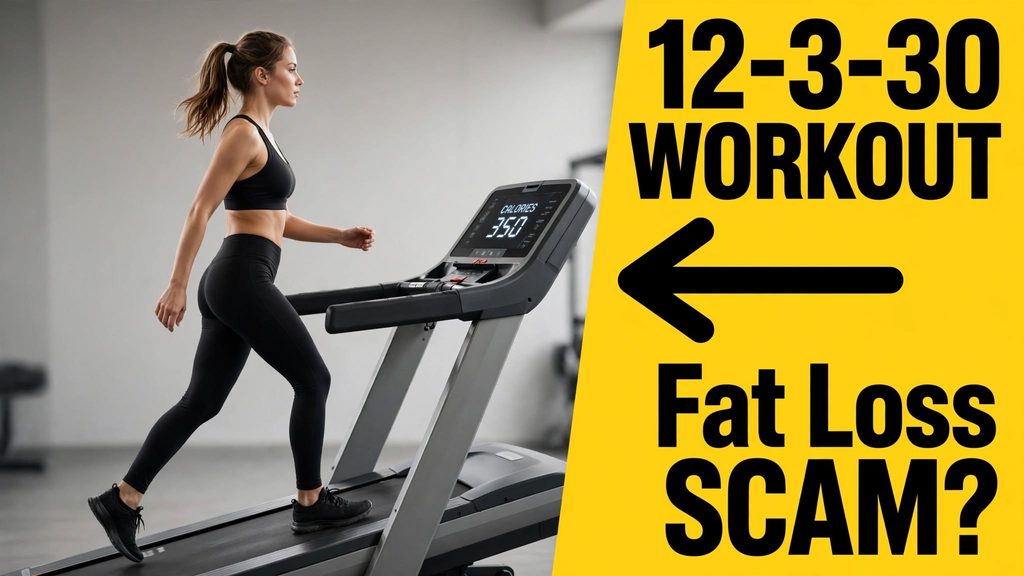
If you’ve spent any time scrolling social media, you’ve likely seen the 12-3-30 workout plastered across fitness feeds. Created by influencer Lauren Giraldo in 2019, this deceptively simple routine—12% incline, 3 mph, 30 minutes—has amassed over 14 million views on TikTok alone . But does it actually deliver on the hype? The answer is more nuanced than a simple yes or no. With peer-reviewed research finally published in 2025, we can now separate the science from the social media speculation. This guide breaks down exactly how the 12-3-30 works, what the research actually shows, and whether it’s the right choice for your fat-loss goals.
What Does “12-3-30” Actually Mean?
The name is the workout: set your treadmill to a 12% incline, walk at 3.0 mph (about 4.8 km/h), and maintain it for 30 minutes .
There are no intervals, no sprints, and no complicated programming. The appeal lies in its simplicity. Anyone can remember three numbers, and the workout is easy to repeat daily. However, don’t let the walking speed fool you—a 12% incline is akin to hiking up a steep hill, forcing your lower body and cardiovascular system to work far harder than a flat walk suggests .
What Does 2025 Research Say About Fat Loss?
For years, the 12-3-30 workout relied on anecdotal evidence. That changed with a pivotal study published in the International Journal of Exercise Science, which compared the metabolic responses of 16 participants performing the 12-3-30 workout versus self-paced treadmill running .
The Fat-Burning Advantage
When matched for total calories burned, the study found that the 12-3-30 workout derived approximately 40.5% of its energy from fat, compared to just 33.1% during running . That’s a roughly 7% advantage for fat utilization.
Why does this happen? The 12-3-30 keeps your heart rate in the moderate-intensity “Zone 2” range (around 60-80% of max). In this zone, your body prefers to oxidize fat for fuel rather than relying on carbohydrate stores, which tends to happen during higher-intensity efforts like running .
The Time-Efficiency Trade-Off
However, the research reveals a catch: running was significantly more time-efficient. Participants burned the same amount of calories in about 23 minutes of running versus the full 30 minutes of the 12-3-30 workout . While the 12-3-30 uses more fat proportionally, running simply gets the job done faster when it comes to total energy expenditure.
| Workout | Avg. Calories Burned (30 min) | % of Energy from Fat | Time Efficiency |
|---|---|---|---|
| 12-3-30 | ~220–320 | ~40.5% | Moderate |
| Running (5-6 mph) | ~300–450 | ~33.1% | High |
| Flat Walking (3 mph) | ~100–150 | Lower | Low |
Additional Benefits Beyond the Scale
Beyond fat oxidation, the 12-3-30 workout offers several other unique advantages worth considering.
Low-Impact Cardio
Unlike running, the 12-3-30 is gentle on your joints. The incline reduces ground-impact forces, making it an excellent option for individuals with knee, hip, or ankle issues who still want a challenging cardiovascular workout .
Muscular Endurance and Toning
Walking at a 12% incline forces your glutes, hamstrings, and calves to work significantly harder than flat walking . This makes the 12-3-30 a hybrid between cardio and lower-body strength training.
Accessibility and Consistency
The routine’s simplicity is a major psychological win. It requires no decision-making, no complex apps, and no equipment beyond a treadmill. This removes friction, making it easier to show up and exercise consistently—a key factor for long-term fat-loss success .
The Risks: Who Should Be Cautious?
The steep incline places significant strain on the lower back, Achilles tendons, and calves. While it’s not inherently dangerous, there are groups who should approach it with caution.
Beginners and Those with Joint Issues
Certified personal trainers warn that beginners or those with pre-existing knee, hip, or lower-back pain may find the 12% incline too taxing . Starting with a lower incline (like 5-7%) and building up is strongly recommended .
Heart Conditions
Because the sustained incline raises your heart rate steadily, individuals with uncontrolled hypertension or cardiovascular conditions should consult a doctor before attempting this workout .
The Overuse Risk
Performing the same repetitive motion daily can lead to overuse injuries, particularly in the calves. Incorporating variety, such as adding strength training or rest days, is crucial for long-term health .
How to Get Started Safely (Modifications Included)
The 12-3-30 workout is a tool, not a magic pill. To get the most benefit while minimizing risk, follow these steps.
- Warm-up: Spend 5 minutes walking at a 0-3% incline to prepare your muscles.
- Progressive Overload: Don’t start at 12% if you’re new. Begin at a 4-6% incline and 3.0 mph for 10 minutes. Add 2% incline and 5 minutes every week until you reach 12% and 30 minutes .
- Posture Check: Keep your chest up and avoid leaning heavily on the handrails, which can reduce calorie burn by 20-30% .
- Frequency: Giraldo does it daily, but most experts recommend 2-4 sessions per week to allow for recovery .
Conclusion
The 12-3-30 workout is not a magic wand, but the 2025 research shows it is a legitimate, science-backed tool for fat loss. Its primary strength lies in fat oxidation and low-impact muscle building, making it ideal for individuals who prefer walking over running.
However, if your goal is to burn maximum calories in the shortest amount of time, running remains more efficient. The best workout is ultimately the one you can stick with. If you find the idea of incline walking appealing and sustainable, the 12-3-30 is a fantastic addition to your routine—provided you listen to your body and progress at a comfortable pace.
FAQs
Q: Can I do the 12-3-30 workout every day?
A: While the creator does it daily, this increases your risk of overuse injuries. Most experts recommend 2-4 sessions per week .
Q: Will the 12-3-30 build muscle?
A: It can help tone and build endurance in your lower body (glutes, hamstrings, calves), but it’s not a substitute for progressive weightlifting if your goal is significant muscle hypertrophy .
Q: Does the 12-3-30 help lose belly fat?
A: It helps create a calorie deficit, but spot reduction is a myth. Overall fat loss is achieved through consistent exercise and a healthy diet